Experiencing Neuroplasticity in My Recovery With Ataxia
A while ago I watched a video on Instagram explaining the principles of neuroplasticity. While I agreed with the principles described, I also wanted to share something in the comments that I've noticed over the recovery journey that began with ataxia and has now passed the three-year mark: when I work on a movement with a conscious purpose, giving it my attention, with a motivation that comes from within and believing that I can do it, it feels like learning it comes more easily. Sometimes I notice that I can progress with fewer repetitions, that my brain and body adapt more quickly to the movement I'm practising.
This is an observation born of my own experience. It made me think about not only how many repetitions I do, but also how present I am mentally within those repetitions. Understanding the purpose of a movement, directing my attention to it, and feeling the excitement of a small bit of progress have become important parts of the work for me.
So how do our attention, our motivation, and our expectation that we can learn change the effect of the repetitions we do?
My First Year in Ataxia Rehabilitation: Expecting to Recover
When I left the hospital, I thought I would recover in a short time. I hadn't yet fully understood the reason for the difficulties I was having; in fact, I thought they might be psychological (the doctors said so too). So when I worked in physiotherapy, I was always expecting an immediate result.
If I tried a movement, I should be able to do it; if I was working, I should be getting better. My expectations were enormous. But when my body didn't meet those expectations, when I couldn't take a step or couldn't keep my balance, my mood would collapse right away. And then my desire to keep going would fade too.
A significant part of my first year was spent between the desire to recover and the disappointment of not being able to see results immediately.
How Did the Ataxia Diagnosis Change My Perspective?
After I received the ataxia diagnosis and began to understand what I was going through better, my perspective slowly changed. I was learning that progress can take time, and that I could improve as I worked and as I added new small gains on top of earlier ones.
Recovering was still very important to me, but now I was also learning not to expect an immediate result from every attempt.
Fine Motor Skills and Lego: My Experience of Working With Desire
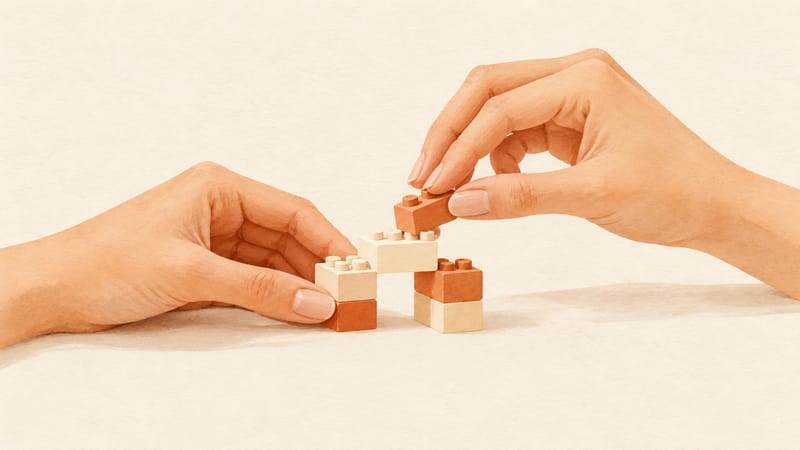
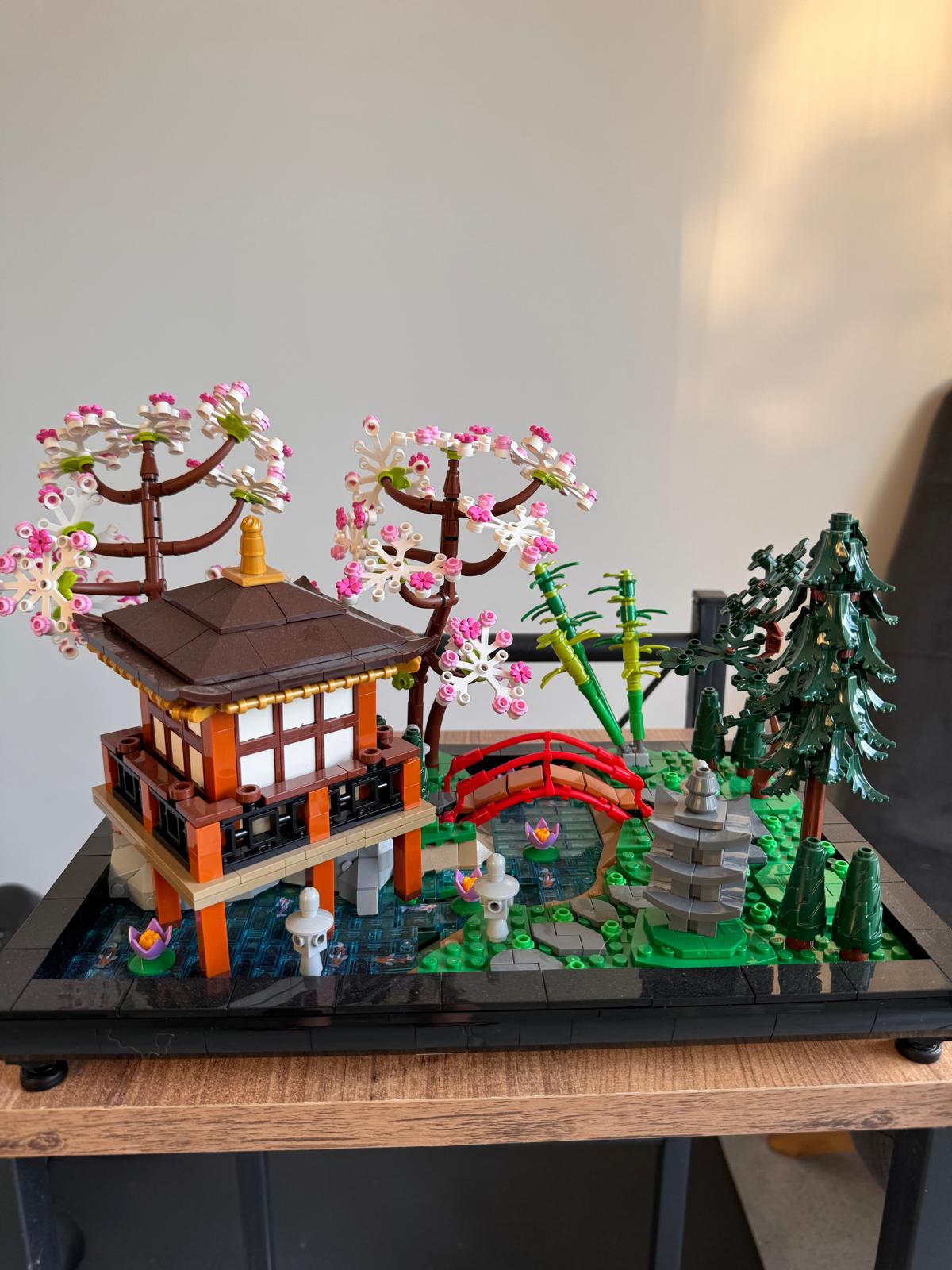
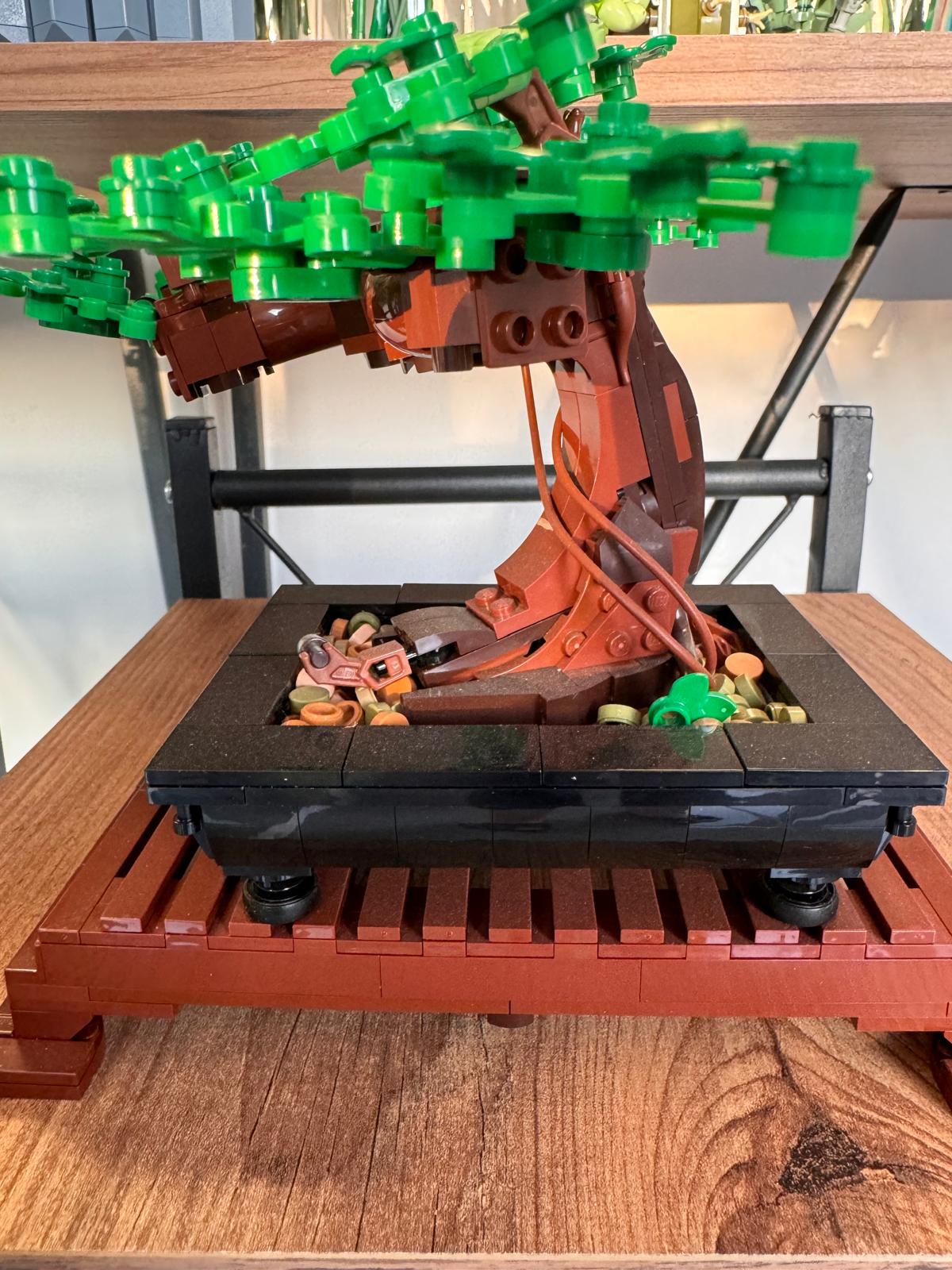
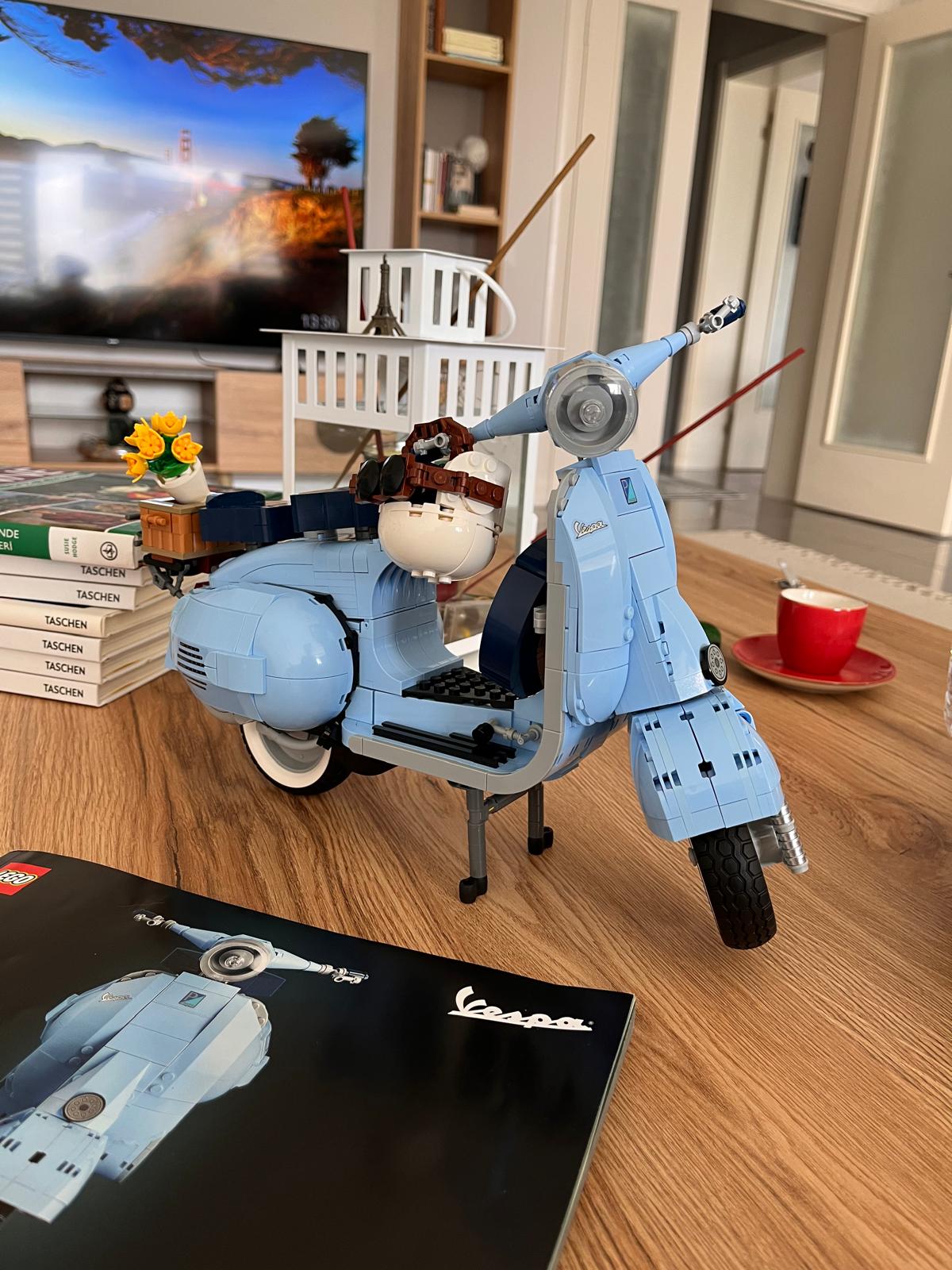
In my second year I had a very clear experience related to this: I started building Lego. I thought that working with small pieces might be good for my fine motor skills, so I bought myself a set.
I was very eager. I enjoyed fitting the pieces together, making something come into being. I built many things, and over time I noticed that my hands were moving in a more coordinated way. I could hold the tiny pieces I used to struggle to grip, and I could place them where they belonged.
Being able to see this made me happy and increased my desire to continue.





When an Activity I Enjoyed Turned Into an Obligation
Then I started buying more sets, and harder ones. As I moved on to one-thousand, two-thousand piece sets, my struggle increased too. At some point I noticed that I was forcing myself to build.
Even though I didn't feel like it, I kept saying, "I have to do this in order to recover." Building Lego had gradually become a duty for me. During that period I felt my hands tremble more, and I struggled again to fit the pieces together.
In the end I stopped building Lego for a long time. I can't separate out how much of this experience came from the increasing difficulty, the fatigue, the pressure I felt on myself, and the reluctance. But I remember very clearly how much my relationship with that same activity had changed.
Motivation in Physiotherapy: The Effect of Small Successes
I notice similar things in physiotherapy. When I think I won't be able to do a movement, or when I have no desire at all to work that day, even starting the movement can feel very hard. Sometimes I feel as if I can't engage my muscles the way I want to.
On the other hand, on some days when I'm reluctant at first but my energy is there, I try a movement with my physiotherapist's guidance and see that I can do it. With that small success, my desire changes too.
The feeling of "I can do it" carries me to the next attempt. Sometimes the desire comes first, and sometimes seeing that I've succeeded gives birth to the desire.
What I've Noticed After Three Years With Ataxia
As I complete my third year and enter my fourth, I notice that over the past year I've taken part in the work more willingly. Some movements I try out of my own wish suddenly become possible, surprisingly so for me.
When I'm reluctant, that same movement can feel far more out of reach. Of course, behind that movement I succeed at "all of a sudden" there are also months, sometimes years, of work.
Still, I can't ignore how my desire, my attention, and the feeling of being able to succeed on a given day change my experience.
Believing in Recovery
When I speak here of a positive perspective, I don't mean feeling good every day or denying the struggle. I mean, rather, making room for the possibility that a movement I struggle with may change over time.
The pressure I felt in my first year — "I have to get better right away" — and the courage I take today from a small bit of progress are two very different feelings for me.
Neuroplasticity, Attention and Motor Learning: The Scientific Research
When I looked for the scientific counterpart of what I've lived through, the first thing that caught my attention was this: in the research, the outcome of learning can change depending on the conditions under which practice takes place.
How attention is directed, success feedback, and the person being able to make choices during the process of practice all contribute, in some experiments, to the learned movement still being performable later on.
At the same time, it's necessary to distinguish between performing a movement better in the moment and learning it in a lasting way. [1, 2]
How Might Attention Affect Neuroplasticity?
The relationship between attention and neuroplasticity isn't just a theoretical idea. In Kamke and colleagues' 2012 study, a visual task that occupied participants' attention more heavily reduced the motor cortex plasticity response produced by brain stimulation.
This finding shows that the brain's response to change can be affected by how attentional resources are being used at that moment. The study doesn't examine physiotherapy or Lego building directly; but it offers a grounding for making sense of the difference I experience when I'm able to give my attention to the task I'm working on.
It isn't possible to draw a linear conclusion from this such as, "The more I focus, the faster I'll recover." [3]
The Role of Expected Success and Feedback in Motor Learning
Expectancy about being able to succeed, and having a say in the practice process, have also been researched. In Wulf and colleagues' 2018 experiment, when participants learning to throw a ball at a target were given positive success feedback, allowed to make certain choices, and had their attention directed to the target — all combined — they achieved better results on a retention test carried out later.
Here, focusing was used not in the sense of consciously controlling every detail of the movement, but in the sense of orienting toward the goal one wants to reach.
This study makes me think of the moments in physiotherapy when, after a small success, I'm more willing to try again. But I don't see the supportive success expectancy in the experiment as the same thing as the obligation to recover immediately that I used to place on myself. [1]
Reward and the Retention of a Learned Movement
The effect of reward received during learning sometimes emerges after the practice is over. In Abe and colleagues' 2011 study, healthy participants performed 80 repetitions of the same motor task.
The groups' gains immediately after training were similar; however, the group whose successes were supported with a monetary reward retained what they had learned better 30 days later.
This result shows that the same amount of practice can produce different retention under different conditions. The finding shows that the effect of the conditions during learning can be seen even after practice has ended. [2]
Learning After Ataxia and Cerebellar Damage
A study that interested me especially from the standpoint of ataxia was Therrien and colleagues' 2016 research.
In this experiment, participants with cerebellar damage, although they struggled to retain a movement learned through error, were able to learn a new movement adaptation by using feedback about success, and were able to retain what they had learned.
The difficulty of the task was adjusted according to the person's recent performance. Involuntary variability in the movements, meanwhile, limited the amount of learning.
This research suggests that there are learning pathways that can be drawn upon even after cerebellar damage. Although it isn't a study specific to the cause of my own ataxia (my ataxia developed as a result of lithium poisoning), it's a valuable example for thinking about how success is defined in rehabilitation and how feedback is given. [4]
Motivation and Neuroplasticity: The Limits of the Evidence
The scientific picture is still not complete. In Parma and colleagues' 2024 review, it was reported that motivation was measured in only 21 percent of 166 experiments focusing on success expectancy and the right to choose.
The researchers emphasised that the evidence is insufficient to reach reliable conclusions about the role of motivation in motor learning.
There is a difference between seeing that a practice helps learning and showing that it happened specifically because motivation increased. [5]
Is It Possible to Learn With Fewer Repetitions? My Personal Observation
All of this helps me express my own observation more carefully:
When I'm willing and when I'm able to notice small successes, I feel that taking part in the work and performing certain movements becomes easier. How much that turns into lasting learning, though, I can only see over time, when I'm able to do that movement again.
My sense that "I learn with fewer repetitions" is part of my experience. The idea the research supports more solidly is that practice conditions such as attention and feedback can change the effect of repetitions.
The Questions I Ask Myself in the Rehabilitation Process
So now, when I evaluate a session, I ask myself other questions too:
- Am I doing this out of curiosity, or because I feel obliged?
- Am I able to notice the small bits of progress?
- Or am I turning every attempt into a test of whether I ought to be better already?
In my own journey these questions have become increasingly important. As I keep working, I'm also learning how I treat myself within that work.
Alongside all of this, I can't move on without adding that the Mindfulness trainings I've taken (MBSR, MBCT) and somatic practices have helped too. Let that be the subject of another post.
References
- Wulf, G., Lewthwaite, R., Cardozo, P., & Chiviacowsky, S. (2018). Triple play: Additive contributions of enhanced expectancies, autonomy support, and external attentional focus to motor learning. Quarterly Journal of Experimental Psychology, 71(4), 824–831. https://doi.org/10.1080/17470218.2016.1276204
- Abe, M., Schambra, H., Wassermann, E. M., Luckenbaugh, D., Schweighofer, N., & Cohen, L. G. (2011). Reward improves long-term retention of a motor memory through induction of offline memory gains. Current Biology, 21(7), 557–562. https://doi.org/10.1016/j.cub.2011.02.030
- Kamke, M. R., Hall, M. G., Lye, H. F., Sale, M. V., Fenlon, L. R., Carroll, T. J., Riek, S., & Mattingley, J. B. (2012). Visual attentional load influences plasticity in the human motor cortex. The Journal of Neuroscience, 32(20), 7001–7008. https://doi.org/10.1523/JNEUROSCI.1028-12.2012
- Therrien, A. S., Wolpert, D. M., & Bastian, A. J. (2016). Effective reinforcement learning following cerebellar damage requires a balance between exploration and motor noise. Brain, 139(1), 101–114. https://doi.org/10.1093/brain/awv329
- Parma, J. O., Miller, M. W., & Bacelar, M. F. B. (2024). OPTIMAL theory’s claims about motivation lack evidence in the motor learning literature. Psychology of Sport and Exercise, 74, 102690. https://doi.org/10.1016/j.psychsport.2024.102690
The video that was the starting point for this post:
Comments · 0
0 comments